qddactuator.com
1 page · 0.5s ·
Mostly AI-generated
68% confidence
The score is a fingerprint of automation, not a quality judgment. A high score means the page reads as machine-generated. It doesn't mean the page is bad.
Each engineering topic follows an identical template (summary, "Best for..." line, three parallel bullets, CTA) in one flat, impersonal register, which suggests LLM-assisted SEO content. The topics are real and technical (reflected inertia, a 105Nm tool, 36 Nm module), which keeps the score from going higher.
1 governance risk detected
- Page title
- QDD Actuator Engineering Resources
- Meta description
- Engineering guides for quasi-direct-drive actuator selection, backdrivability, reflected inertia, torque control, architecture comparison, and thermal sizing.
- Final URL
- https://qddactuator.com/engineering
- Canonical URL
- https://qddactuator.com/engineering
- Robots directive
- Not set — search engines default to index, follow
- Language
- en
- Built with
- Next.js
How the page presents itself in a Google result and as a shared link, rebuilt from the tags we crawled.
QDD Actuator Engineering Resources
Engineering guides for quasi-direct-drive actuator selection, backdrivability, reflected inertia, torque control, architecture comparison, and thermal siz…
- Title · 34 characters
- Description · 158 characters — long descriptions get cut around 155
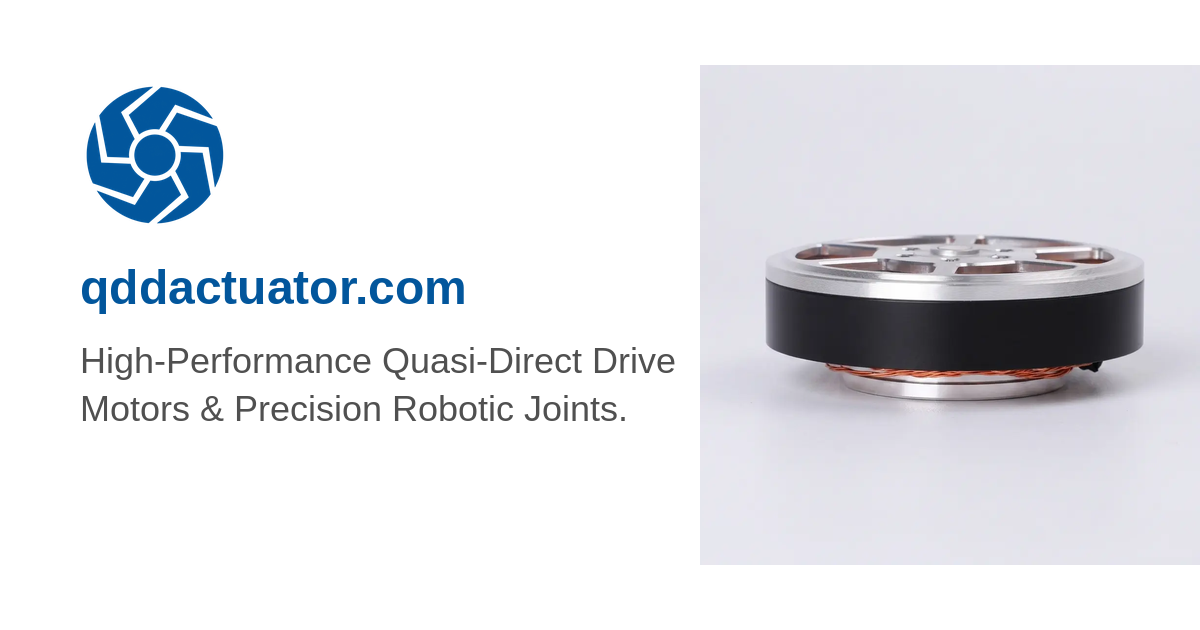
QDD Actuator Engineering Resources
Engineering guides for quasi-direct-drive actuator selection, backdrivability, reflected inertia, torque control, architecture comparison, and thermal sizing.
- Open Graph image present
No AI content disclosure detected
EU AI Act Article 50 requires that AI-generated content presented to EU audiences be labelled as such. The FTC has also signalled enforcement interest in undisclosed AI-generated content. A simple site-wide disclosure policy covers both.
## AI Content Policy

Some content on this website is created or assisted by artificial intelligence
(AI) tools. We are transparent about our use of AI and committed to accuracy.

**What we use AI for:** [content drafting / image generation / data summaries]
**Human review:** All AI-generated content is reviewed before publication
**Accuracy:** We verify factual claims, but AI-generated content may contain errors

This disclosure is consistent with EU AI Act Article 50 obligations.

Questions? Contact us at [email].

_Policy version: 1.0 — [DATE]_
<!-- Place in your site header or footer -->
<div
  class="ai-disclosure-notice"
  role="note"
  aria-label="AI content notice"
>
  Some content on this site is AI-assisted.
  <a href="/ai-policy">Our AI policy</a>
</div>
- Clear signalStructure
Every topic card repeats the same summary, 'Best for', three-bullet, CTA pattern
Evidence- “Best for buyers deciding whether QDD is the right architecture before requesting actuator samples.”body
- “Read engineering note”×6body
Try thisVary card formats and add real specifics, such as test data, torque curves or a named engineer's findings.
- Clear signalContent
Prose is abstract and parallel, with few measured numbers or first-hand anecdotes
Evidence- “Backdrivability is not one number; friction, ratio, and motor/control choices interact”body
- “not broad robot market content”body
Try thisAdd measured backdrive torque values, test setups and named authors to ground the guidance.
Signals of human authorship the page is doing well.
- Content
Technically specific topics (reflected inertia, thermal sizing, gravity-moment tool) reflect real domain knowledge.
- Content70
Repeated "Best for..." blurbs and three-bullet summaries per note, with flat rhythm and few concrete figures
- Structure70
Uniform card per topic: title, summary, "Best for", three bullets, "Read engineering note"; all H2s short
- Imagery45
16 images with full alt text, but alt text is generic reference-style product captions
- Tone68
Uniform procurement-oriented register throughout; no personal voice or opinion
- Words1,034
- Images16
- Alt coverage100%
- Images without size0
- Internal links49
- External links2
- Schema blocks2
- HTML size167 KB
- Text-to-HTML5%
No common LLM-marker phrases found — none of the stock AI vocabulary we scan for appears in the body text even once.
- Meta tagsAll presentWhy this matters
Why it matters. Title and description are the two strings Google shows in search results. They decide whether anyone clicks. A canonical tag tells Google which URL is the source of truth when the same content lives at multiple paths.
Passing looks like. A title, a meta description and a canonical link are all present, with exactly one description tag, placed where Google reads it. Their lengths are shown in the report's search preview.
Fix. Add the missing tags inside the page head and delete any second description tag. Keep images and iframes below your meta tags, because Google stops reading the head at the first one. Treat the title as a headline you'd want to read in a SERP, not a brand slogan.
- Heading structure1 H1, 11 H2Why this matters
Why it matters. Headings are how crawlers and assistive tech understand a page's outline. One H1 names the page. H2s break it into sections. A missing H1, or several, blurs what the page is about.
Passing looks like. Exactly one H1, and at least one H2.
Fix. Replace the missing or duplicate H1 with a single, descriptive heading. Promote section titles to H2. Demote sub-points to H3.
- Mobile readinessResponsiveWhy this matters
Why it matters. Google indexes the mobile version of a page. Without a responsive viewport, phones render the page zoomed out, which makes it hard to read and use.
Passing looks like. A viewport meta tag set to width=device-width. The scan reads the HTML and doesn't render the page, so it can't check touch targets or font sizes.
Fix. Add a viewport meta tag set to width=device-width and initial-scale=1, then audit your largest blocks at mobile widths.
- Page speed signals0.5s · 167 KBWhy this matters
Why it matters. Response time, page weight and images that load without a reserved size all show up in Core Web Vitals. Slow pages, and layouts that jump as images arrive, cost visitors and rankings.
Passing looks like. The HTML arrives in under 1.5 s and weighs under 500 KB, the page has fewer than 30 images, and no more than two images lack width and height. These are signals from one HTML fetch, not a PageSpeed Insights measurement.
Fix. Speed up the server response and trim the HTML. Give every image width and height attributes, or a CSS aspect-ratio, so the layout doesn't jump, and serve compressed images sized to the viewport.
- Schema markup2 schema blocksWhy this matters
Why it matters. JSON-LD structured data is how you earn rich results: review stars, FAQ accordions, breadcrumbs, article cards. Skip it and Google has nothing structured to pull from when it builds your SERP card.
Passing looks like. At least one JSON-LD block is present. The check doesn't validate the block or its types, so test it with Google's Rich Results Test too.
Fix. Add an application/ld+json script block describing the page. Validate with Google's Rich Results Test before deploying.
- Broken links0/5 broken in sampleWhy this matters
Why it matters. Broken internal links waste crawl budget, degrade UX, and signal to Google that the site isn't well-maintained. They also cap how deep crawlers reach.
Passing looks like. Every internal link in the sample loads successfully, after following redirects. Timeouts and network errors count as broken.
Fix. Use the link list above to spot the broken paths. Either restore the missing pages or update the links to point at live URLs.
- Image alt textAll have altWhy this matters
Why it matters. Alt text is what screen readers read aloud, and what Google reads instead of pixels. Skip it and you lose on both fronts.
Passing looks like. Nearly every image has non-empty alt text. An empty alt="" counts as missing here, even on a decorative image.
Fix. Audit images in /assets and CMS uploads. Write alts that describe what's in the image, not what it links to.
Every H1, H2, and H3 we found on the page, in document order.
Show heading outline
- H1QDD Actuator Engineering Resources
- H2How to Use These Notes
- H2Visual references for QDD architecture and trade-off review
- H2105Nm Torque Robot Actuator Tool & Report
- H2Quasi-Direct-Drive Explained
- H2Backdrivability and Reflected Inertia
- H2Torque Control in QDD Actuators
- H2QDD vs Harmonic Drive
- H2QDD vs Series Elastic Actuator
- H2Thermal Sizing for QDD Joints
- H2Quasi-Direct-Drive Motor
- H2Decision Criteria Snapshot
We HEAD-check up to five internal links to spot broken paths quickly.
Show sampled links
Was this report useful?
Share this scan
Every CrawlRanker scan gets a public, shareable URL. Send it to a client, post it in a thread, or benchmark a competitor.
Preview scan. SEO checks are live. AI scoring is in beta.