mklinniko.com
1 page · 0.5s ·
Mostly human-written
74% confidence
The score is a fingerprint of automation, not a quality judgment. A high score means the page reads as machine-generated. It doesn't mean the page is bad.
The copy is full of concrete, checkable specifics: named characters, a release date, a Saskatchewan postal address, and a quoted "M.K.'s favourite line" with a real anecdote-like voice. The only generic-sounding lines ("Every story has its own world and its own colours.") are short and sit within a conventional author-site layout rather than driving the text, so the page reads as predominantly human-written.
No governance risks detected
- Page title
- M.K. Linniko | Where Static Sleeps — Dystopian Fiction
- Meta description
- Dystopian fiction from M.K. Linniko. Debut novel Where Static Sleeps — a haunting story of memory, addiction, and the cost of a perfect digital escape.
- Final URL
- https://mklinniko.com/
- Canonical URL
- —
- Robots directive
- Not set — search engines default to index, follow
- Language
- en
How the page presents itself in a Google result and as a shared link, rebuilt from the tags we crawled.
M.K. Linniko | Where Static Sleeps — Dystopian Fiction
Dystopian fiction from M.K. Linniko. Debut novel Where Static Sleeps — a haunting story of memory, addiction, and the cost of a perfect digital escape.
- Title · 54 characters
- Description · 151 characters
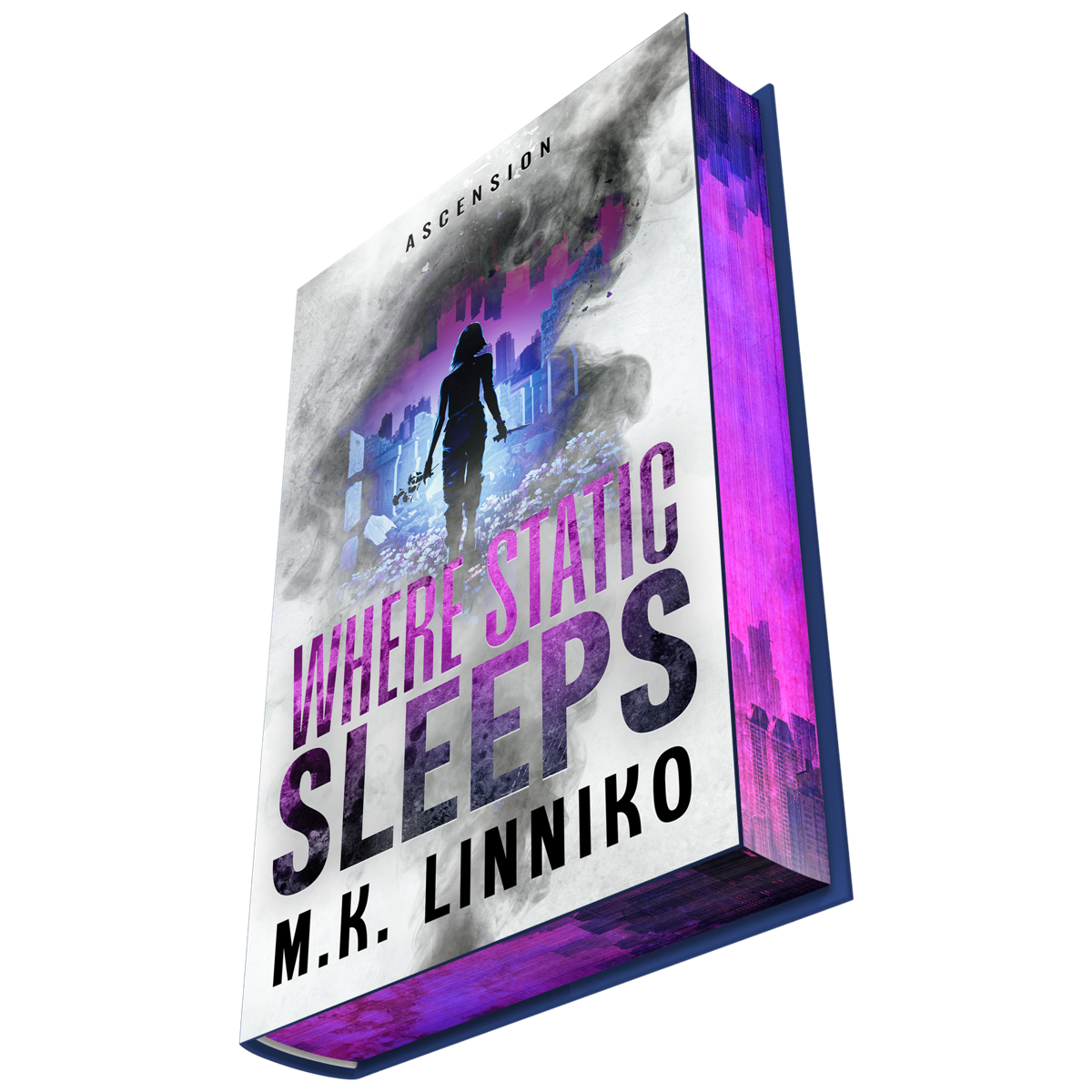
M.K. Linniko | Where Static Sleeps — Dystopian Fiction
Dystopian fiction from M.K. Linniko. Debut novel Where Static Sleeps — a haunting story of memory, addiction, and the cost of a perfect digital escape.
- Open Graph image present
- Worth notingStructure
Layout follows a conventional author-site template, with hero, book card, and newsletter sections in standard order
Evidence- “Every story has its own world and its own colours.”body
- “Letters from M.K.”H2
Try thisAdd one section that breaks the template, such as a reader letter, excerpt, or behind-the-scenes note, to show a distinct layout.
Signals of human authorship the page is doing well.
- Content
Concrete invented specifics (Maevie, Arlo, Frostvale, a Saskatchewan PO Box) and a quoted favourite line give the copy a real author's texture.
- Tone
Consistent first-person author voice with personal framing, such as 'when the static gets too loud, I write about main characters...'
- Content24
Specific invented names (Maevie, Arlo, Reena, Frostvale) and a real mailing address anchor the copy in concrete detail
- Structure34
Standard author-site template order: hero, book card, anthology, what's next, newsletter signup, footer
- Imagery35
Book cover and chibi character art referenced; 2 of 9 images missing alt, no stock-photo pattern visible in text
- Tone16
Consistent authorial voice with a quoted personal favourite line and a first-person author statement
- Words455
- Images9
- Alt coverage78%
- Images without size2
- Internal links25
- External links2
- Schema blocks0
- HTML size58 KB
- Text-to-HTML5%
Each bar is one sentence of the page, in reading order — taller means longer. Human prose tends to look jagged, mixing short punches with long explanations. Machine drafts tend to flatten into even bars.
Computed from the body text we crawled, split on punctuation and filtered to prose-length sentences. Rhythm is a heuristic, not a verdict — some human writers are metronomically even, and a good editor smooths a machine draft.
No common LLM-marker phrases found — none of the stock AI vocabulary we scan for appears in the body text even once.
- Meta tagsMissing canonicalWhy this matters
Why it matters. Title and description are the two strings Google shows in search results. They decide whether anyone clicks. A canonical tag tells Google which URL is the source of truth when the same content lives at multiple paths.
Passing looks like. A title, a meta description and a canonical link are all present, with exactly one description tag, placed where Google reads it. Their lengths are shown in the report's search preview.
Fix. Add the missing tags inside the page head and delete any second description tag. Keep images and iframes below your meta tags, because Google stops reading the head at the first one. Treat the title as a headline you'd want to read in a SERP, not a brand slogan.
- Heading structure1 H1, 5 H2Why this matters
Why it matters. Headings are how crawlers and assistive tech understand a page's outline. One H1 names the page. H2s break it into sections. A missing H1, or several, blurs what the page is about.
Passing looks like. Exactly one H1, and at least one H2.
Fix. Replace the missing or duplicate H1 with a single, descriptive heading. Promote section titles to H2. Demote sub-points to H3.
- Mobile readinessResponsiveWhy this matters
Why it matters. Google indexes the mobile version of a page. Without a responsive viewport, phones render the page zoomed out, which makes it hard to read and use.
Passing looks like. A viewport meta tag set to width=device-width. The scan reads the HTML and doesn't render the page, so it can't check touch targets or font sizes.
Fix. Add a viewport meta tag set to width=device-width and initial-scale=1, then audit your largest blocks at mobile widths.
- Page speed signals0.5s · 58 KBWhy this matters
Why it matters. Response time, page weight and images that load without a reserved size all show up in Core Web Vitals. Slow pages, and layouts that jump as images arrive, cost visitors and rankings.
Passing looks like. The HTML arrives in under 1.5 s and weighs under 500 KB, the page has fewer than 30 images, and no more than two images lack width and height. These are signals from one HTML fetch, not a PageSpeed Insights measurement.
Fix. Speed up the server response and trim the HTML. Give every image width and height attributes, or a CSS aspect-ratio, so the layout doesn't jump, and serve compressed images sized to the viewport.
- Schema markupNo JSON-LDWhy this matters
Why it matters. JSON-LD structured data is how you earn rich results: review stars, FAQ accordions, breadcrumbs, article cards. Skip it and Google has nothing structured to pull from when it builds your SERP card.
Passing looks like. At least one JSON-LD block is present. The check doesn't validate the block or its types, so test it with Google's Rich Results Test too.
Fix. Add an application/ld+json script block describing the page. Validate with Google's Rich Results Test before deploying.
- Broken links0/5 broken in sampleWhy this matters
Why it matters. Broken internal links waste crawl budget, degrade UX, and signal to Google that the site isn't well-maintained. They also cap how deep crawlers reach.
Passing looks like. Every internal link in the sample loads successfully, after following redirects. Timeouts and network errors count as broken.
Fix. Use the link list above to spot the broken paths. Either restore the missing pages or update the links to point at live URLs.
- Image alt text2 missing altWhy this matters
Why it matters. Alt text is what screen readers read aloud, and what Google reads instead of pixels. Skip it and you lose on both fronts.
Passing looks like. Nearly every image has non-empty alt text. An empty alt="" counts as missing here, even on a decorative image.
Fix. Audit images in /assets and CMS uploads. Write alts that describe what's in the image, not what it links to.
Every H1, H2, and H3 we found on the page, in document order.
Show heading outline
- H1M.K. Linniko
- H2Where Static Sleeps
- H2Chapter one is coming soon
- H2Midwinter Magic
- H2Her books
- H2Letters from M.K.
- H3Where Static Sleeps
- H3Midwinter Magic
- H3What's next
We HEAD-check up to five internal links to spot broken paths quickly.
Show sampled links
Was this report useful?
Add this badge to the page
The page we scanned reads as mostly human-written. This verdict covers that one page, so put the badge on it, not in a sitewide footer. The badge names the page and links back to this report, so anyone who sees it can check the evidence.
The badge shows this report's AI score and scan date. After a big change to the page, re-scan it and swap in the new report's badge.
Share this scan
Every CrawlRanker scan gets a public, shareable URL. Send it to a client, post it in a thread, or benchmark a competitor.
Preview scan. SEO checks are live. AI scoring is in beta.