axialfluxcore.com
1 page · 0.5s ·
Mostly AI-generated
66% confidence
The score is a fingerprint of automation, not a quality judgment. A high score means the page reads as machine-generated. It doesn't mean the page is bad.
The page is long and substantive, but its structure and phrasing follow an AI-builder pattern: a "Tool result first, evidence second" framing, a 1-2-3 step block, and a Result status/Meaning/Next action/Owner table. The FAQ entry "Why did the page remove the phrase optimal skew angle?" reads like a regenerated edit note, and there is no named author. Real domain specificity (LCM, q, slot pitch) pulls the score down from the extreme.
3 governance risks detected
- Page title
- AFPM Core Cogging Torque Reduction | AxialFluxCore
- Meta description
- Screen AFPM core cogging torque reduction by checking slot/pole LCM, skew references, SMC tooth options, validation gates, and RFQ evidence before tooling.
- Canonical URL
- https://axialfluxcore.com/learn/afpm-core-cogging-torque-reduction
- Robots directive
- Not set — search engines default to index, follow
- Language
- en
- Built with
- Next.js
How the page presents itself in a Google result and as a shared link, rebuilt from the tags we crawled.
AFPM Core Cogging Torque Reduction | AxialFluxCore
Screen AFPM core cogging torque reduction by checking slot/pole LCM, skew references, SMC tooth options, validation gates, and RFQ evidence before tooling.
- Title · 50 characters
- Description · 155 characters
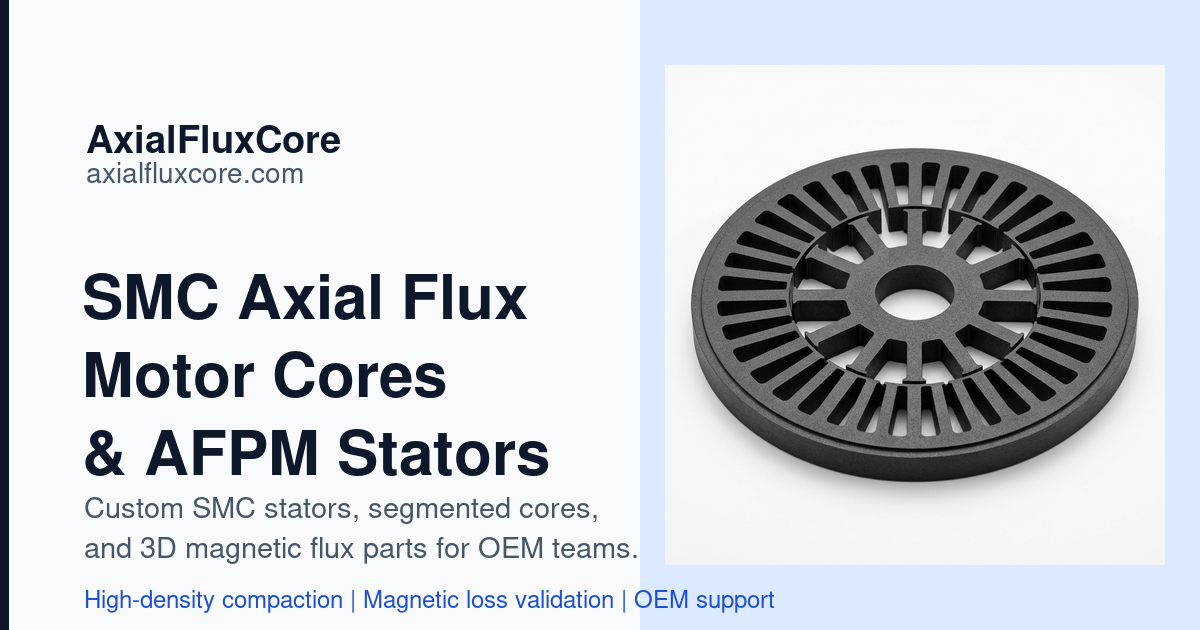
AFPM Core Cogging Torque Reduction | AxialFluxCore
Screen AFPM core cogging torque reduction by checking slot/pole LCM, skew references, SMC tooth options, validation gates, and RFQ evidence before tooling.
- Open Graph image present
AI-generated content may not be copyrightable
The US Copyright Office has held that AI-generated content without sufficient human authorship cannot be registered and receives no copyright protection. This means competitors can freely copy AI-generated pages and you lose exclusivity over your content.
## Protecting AI-Assisted Content

To maximise copyright protection for AI-assisted content:

1. **Document human contributions** — Keep records of the prompts used,
   the editorial decisions made, and the human modifications applied.

2. **Edit substantially** — Meaningful human selection, arrangement, and
   creative editing of AI output can establish copyrightable authorship.

3. **Register what you can** — Register works with significant human
   authorship via the US Copyright Office, disclosing AI use as required.

4. **Update your Terms of Service** to address AI-generated content:
   > "Content on this site may be created with AI assistance. We retain
   > rights to the selection, arrangement, and editorial expression of
   > all published content."

See the Copyright Office's [AI guidance](https://www.copyright.gov/ai/)
for current registration requirements.
High AI content score risks Google Helpful Content penalty
Google's Helpful Content system actively demotes content it classifies as written primarily for search engines rather than humans. A predominantly AI-generated site with low E-E-A-T signals is a candidate for site-wide demotion.
## E-E-A-T Improvement Checklist

Google evaluates Experience, Expertise, Authoritativeness, and Trustworthiness
(E-E-A-T). For AI-heavy sites:

- [ ] Add named author bios with credentials to key pages
- [ ] Link to primary sources for all factual claims
- [ ] Add a clear About page explaining who runs the site and their expertise
- [ ] Publish a clear editorial policy describing your AI use
- [ ] Add schema markup: `author`, `Organization`, `dateModified`
- [ ] Ensure contact information is present and functional
- [ ] Solicit and publish genuine user reviews where appropriate
- [ ] Verify key facts and add human-authored expertise on high-traffic pages
No AI content disclosure detected
EU AI Act Article 50 requires that AI-generated content presented to EU audiences be labelled as such. The FTC has also signalled enforcement interest in undisclosed AI-generated content. A simple site-wide disclosure policy covers both.
## AI Content Policy

Some content on this website is created or assisted by artificial intelligence
(AI) tools. We are transparent about our use of AI and committed to accuracy.

**What we use AI for:** [content drafting / image generation / data summaries]
**Human review:** All AI-generated content is reviewed before publication
**Accuracy:** We verify factual claims, but AI-generated content may contain errors

This disclosure is consistent with EU AI Act Article 50 obligations.

Questions? Contact us at [email].

_Policy version: 1.0 — [DATE]_
<!-- Place in your site header or footer -->
<div
  class="ai-disclosure-notice"
  role="note"
  aria-label="AI content notice"
>
  Some content on this site is AI-assisted.
  <a href="/ai-policy">Our AI policy</a>
</div>
- Strong signalStructure
Page follows a templated AI-builder sequence: hero, calculator, conclusions, FAQ, gates, with uniform step blocks
Evidence- “Tool result first, evidence second”H2
- “Turn Calculator Results Into Actions”H2
- “Frequently Asked Questions”H2
Try thisRewrite section headings as specific claims about your own work and drop the generic three-step explainer.
- Clear signalContent
Hedge-and-restate phrasing with generic framing lines repeats across sections
Evidence- “The tool gives the first answer; the report decides whether that answer is safe to use.”body
- “Use this screen to shortlist candidate slot/pole sets, not to approve final tooling.”body
Try thisCut the parallel 'X gives the answer, Y decides' constructions and state one concrete rule per section instead.
- Clear signalTone
FAQ includes an editorial meta-question about wording changes, which reads as a regenerated artifact
Evidence- “Why did the page remove the phrase optimal skew angle?”H3
Try thisRemove page-revision questions from the FAQ and replace them with real questions engineers ask about the calculator.
Signals of human authorship the page is doing well.
- Content
Specific electromagnetic parameters (LCM, GCD, q, cogging period in mech degrees) with worked values shown in the calculator output.
- Content72
Templated "tool result first, evidence second" framing and balanced claim-then-restate sentences, though slot/pole math is specific
- Structure82
Hero, calculator, Key Conclusions, FAQ, Validation Gates in a repeated template-like sequence with 1-2-3 step blocks
- Imagery45
Only 3 images with no visible alt-gaps or stock markers; imagery is too sparse to weigh heavily
- Tone70
Uniform, neutral register with no named author or opinion; tone stays in one marketing-engineering voice throughout
- Words2,177
- Images3
- Alt coverage100%
- Internal links61
- External links5
- Schema blocks4
- HTML size349 KB
- Text-to-HTML4%
Each bar is one sentence of the page, in reading order — taller means longer. Human prose tends to look jagged, mixing short punches with long explanations. Machine drafts tend to flatten into even bars.
Computed from the body text we crawled, split on punctuation and filtered to prose-length sentences. Rhythm is a heuristic, not a verdict — some human writers are metronomically even, and a good editor smooths a machine draft.
No common LLM-marker phrases found — none of the stock AI vocabulary we scan for appears in the body text even once.
- Meta tagsAll presentWhy this matters
Why it matters. Title and description are the two strings Google shows in search results. They decide whether anyone clicks. A canonical tag tells Google which URL is the source of truth when the same content lives at multiple paths.
Passing looks like. A non-empty title under 60 characters, a meta description under 160, and a self-referencing canonical link.
Fix. Add the missing tags inside the page head. Treat the title as a headline you'd want to read in a SERP, not a brand slogan.
- Heading structure1 H1, 9 H2Why this matters
Why it matters. Headings are how crawlers and assistive tech understand a page's outline. One H1 names the page. H2s break it into sections. Skipped levels and missing H1s confuse both.
Passing looks like. Exactly one H1, at least one H2, and no skipped levels (no H1 to H3 jumps).
Fix. Replace the missing or duplicate H1 with a single, descriptive heading. Promote section titles to H2. Demote sub-points to H3.
- Mobile readinessResponsiveWhy this matters
Why it matters. Google indexes mobile-first. A page without a responsive viewport renders zoomed-out on phones, fails Core Web Vitals on touch, and loses its mobile ranking.
Passing looks like. A meta viewport tag with width=device-width and a layout that reflows under 600px.
Fix. Add a viewport meta tag set to width=device-width and initial-scale=1, then audit your largest blocks at mobile widths.
- Page speed signals0.5s · 349 KBWhy this matters
Why it matters. Page weight and response time directly feed Core Web Vitals. Slow LCP and oversized HTML hurt rankings more than people expect.
Passing looks like. First-byte under 1.5s, HTML payload under 500 KB, fewer than 30 images on the initial render.
Fix. Trim render-blocking scripts, defer non-critical CSS, and serve compressed images sized to the viewport. Move heavy components below the fold.
- Schema markup4 schema blocksWhy this matters
Why it matters. JSON-LD structured data is how you earn rich results: review stars, FAQ accordions, breadcrumbs, article cards. Skip it and Google has nothing structured to pull from when it builds your SERP card.
Passing looks like. At least one valid JSON-LD block matching schema.org types relevant to the page (Article, Product, FAQPage, Organization).
Fix. Add an application/ld+json script block describing the page. Validate with Google's Rich Results Test before deploying.
- Broken links0/5 broken in sampleWhy this matters
Why it matters. Broken internal links waste crawl budget, degrade UX, and signal to Google that the site isn't well-maintained. They also cap how deep crawlers reach.
Passing looks like. Every internal link in the sample returns 2xx or 3xx. No dead anchors, no stale paths.
Fix. Use the link list above to spot the broken paths. Either restore the missing pages or update the links to point at live URLs.
- Image alt textAll have altWhy this matters
Why it matters. Alt text is what screen readers read aloud, and what Google reads instead of pixels. Skip it and you lose on both fronts.
Passing looks like. Every meaningful image has a descriptive alt attribute. Decorative images can use alt="" to be skipped intentionally.
Fix. Audit images in /assets and CMS uploads. Write alts that describe what's in the image, not what it links to.
Every H1, H2, and H3 we found on the page, in document order.
Show heading outline
- H1AFPM Core Cogging Torque Reduction
- H2Tool result first, evidence second
- H2Turn Calculator Results Into Actions
- H2Key Conclusions
- H2What The Angles Actually Mean
- H2Scenario Examples
- H2Evidence Ledger And Limits
- H2Related Engineering Paths
- H2Validation Gates
- H2Frequently Asked Questions
- H3Calculated results
- H3Using the calculatorWhat does the LCM result mean?
- H3Using the calculatorWhy did the page remove the phrase optimal skew angle?
- H3Using the calculatorWhat should I do with a boundary warning?
- H3Using the calculatorCan I use odd pole counts?
- H3Engineering decisionsIs fractional slot always better?
- H3Engineering decisionsWhen should I choose magnet skew instead of stator skew?
- H3Engineering decisionsHow does SMC change the mitigation options?
- H3Engineering decisionsDoes cogging reduction always reduce torque?
- H3Validation and sourcingWhat evidence should be in a supplier quote?
- H3Validation and sourcingWhat is the minimum prototype test?
- H3Validation and sourcingShould cogging torque be separated from loaded torque ripple?
- H3Validation and sourcingWhen is public evidence insufficient?
We HEAD-check up to five internal links to spot broken paths quickly.
Show sampled links
- 200 · OKhttps://axialfluxcore.com/products/axial-flux-motor-core
- 200 · OKhttps://axialfluxcore.com/solutions/evtol-axial-flux-cores
- 200 · OKhttps://axialfluxcore.com/products
- 200 · OKhttps://axialfluxcore.com/learn/afpm-core-custom-manufacturing
- 200 · OKhttps://axialfluxcore.com/learn/afpm-core-assembly-process
Was this report useful?
Share this scan
Every CrawlRanker scan gets a public, shareable URL. Send it to a client, post it in a thread, or benchmark a competitor.
Preview scan. SEO checks are live. AI scoring is in beta.